LATEST BLOG POST: Expert Spotlight Series
Publish date: Jun 15, 2026
Topic: AI innovation | Machine Learning | Collaboration
We built the ThinkOnward Community around a simple conviction: the most powerful solutions to the energy industry's hardest problems already exist inside the people working on them every day. Geoscientists, data scientists, reservoir engineers, and AI practitioners who have spent careers in the field, building expertise that doesn't live in textbooks. It lives in the work.
Starting June 24th, four ThinkOnward Community Members are stepping up to share exactly that: research, case studies, and practical results grounded in applied work.
This is what our community was built for. A place where knowledge moves freely, where experts are celebrated, and where the collective intelligence of our community drives the industry forward.
Learn more about each session and register below.
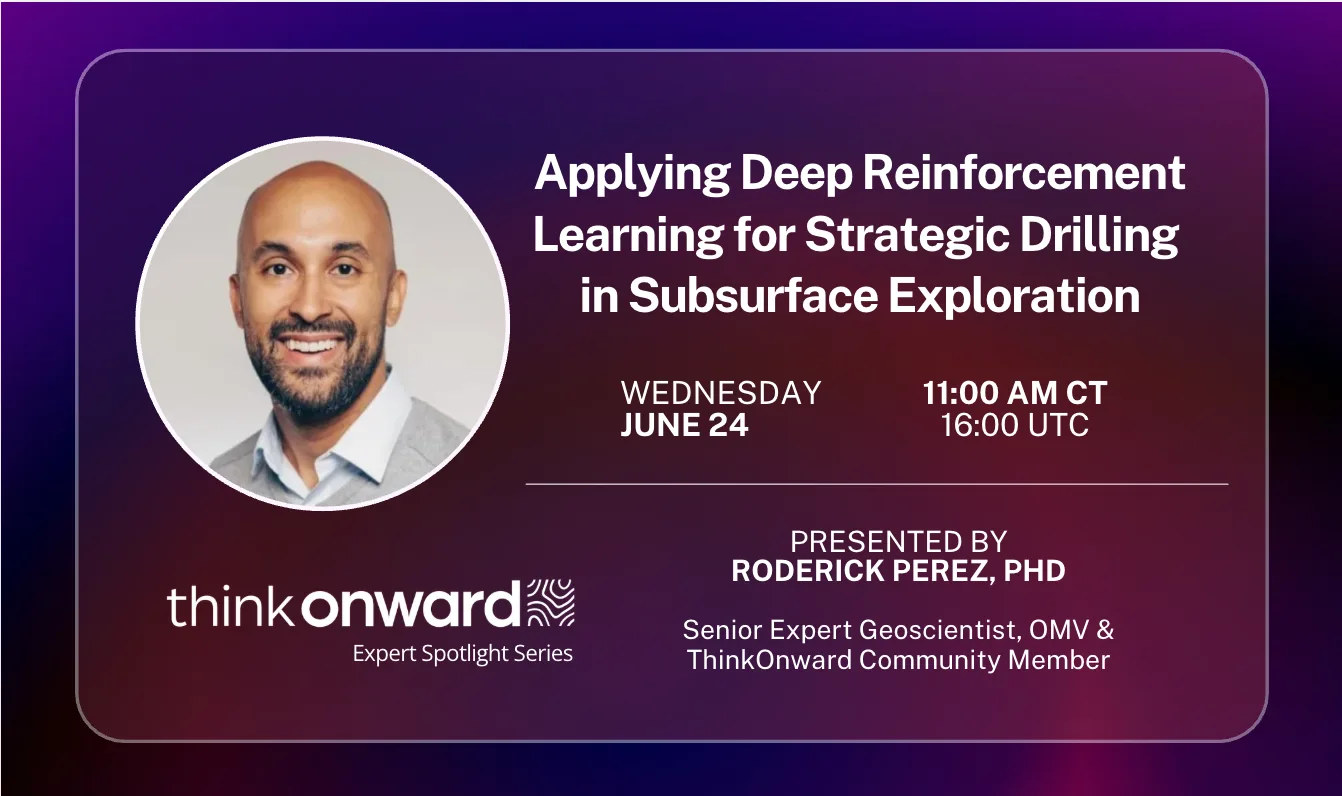
Optimizing where to drill without access to real seismic data is a hard problem. In this session, Roderick Perez walks through a fully synthetic approach, building a pipeline that combines geological modeling, hydrocarbon migration simulation, and seismic generation to train a Deep Q-Network on subsurface scenarios.
The results highlight an important dynamic: agents tuned for longer-term strategies and progressively focused search tend to produce stronger outcomes than those optimized for short-term gain. The session also examines where the approach performs well and where it becomes less reliable as signal complexity increases.
A technical, grounded look at how reinforcement learning techniques can be explored in subsurface contexts. Register here.
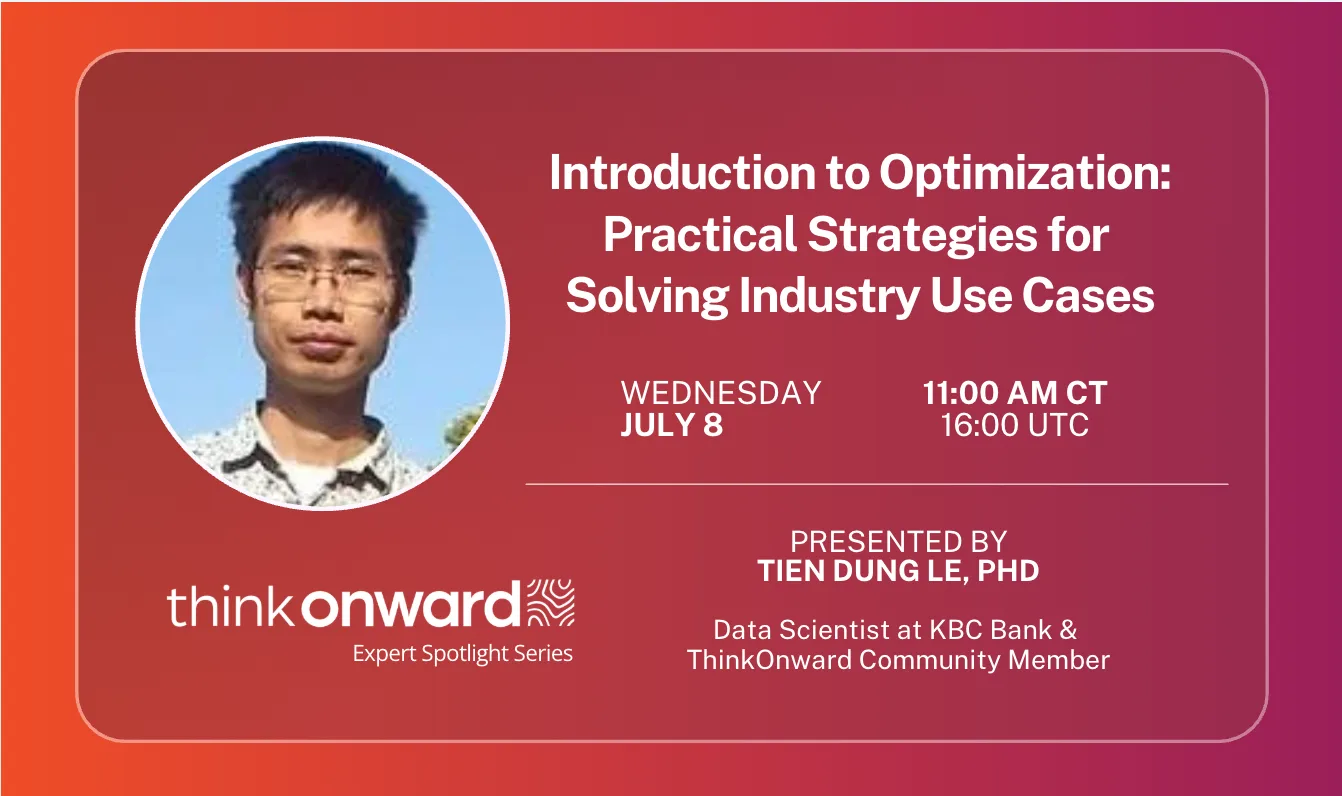
Optimization challenges rarely present themselves in clean, structured ways. In this session, Dr. Tien Dung Le walks through two representative case studies developed within the ThinkOnward community, including workforce routing under constraints and identifying heat sources from noisy sensor data.
Rather than focusing only on outcomes, the session breaks down the process: defining the problem, building a baseline, diagnosing underperformance, and iterating toward better solutions. The emphasis is on practical thinking and decision-making when standard approaches fall short.
A clear, experience-driven view of how optimization approaches are developed in complex, real-world-like scenarios. Register here.
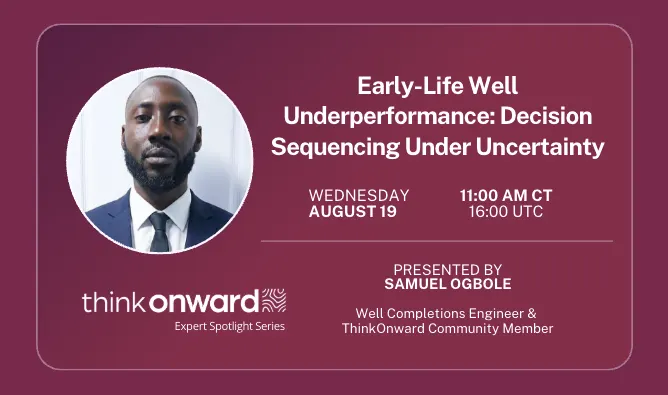
A representative well scenario: designed to best practice, completed correctly, and operating within expected reservoir conditions, yet underperforming early and declining faster than expected.
In this session, Samuel O. Ogbole frames underperformance as a system-level problem rather than a single failure point. Using nodal analysis, he shows how reservoir inflow, wellbore hydraulics, artificial lift, and surface conditions interact to determine actual performance. He then walks through a structured five-step framework for diagnosing and responding, from data validation through intervention decisions.
A practical look at structured decision-making under uncertainty in well performance analysis. Register here.
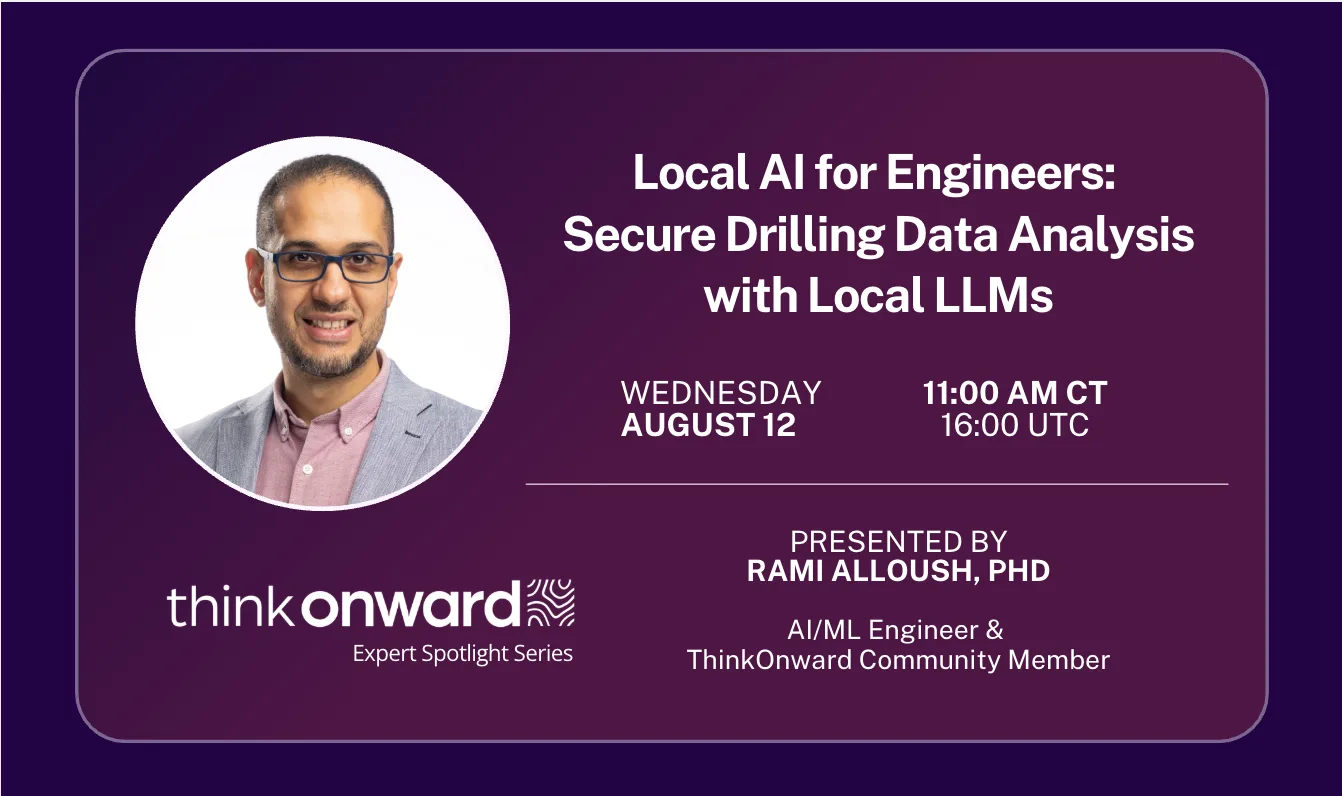
Engineers often work with large volumes of operational reports, where critical insights are embedded in unstructured text. In many environments, constraints around sensitive data limit how AI tools can be applied.
In this session, Dr. Rami Alloush explores an alternative approach: running open-weight language models locally within controlled environments. He demonstrates how these models can be used to summarize reports, extract key events, and compare daily activity, while maintaining data within defined boundaries. The session also covers current limitations so attendees can better understand where these approaches are most effective.
A practical introduction to AI workflows designed for data-sensitive engineering contexts. Register here.

ThinkOnward is a platform of innovation and collaboration focused on the energy sector. We’re creating a hub for the “thinkers” and "doers" who want to foster new ideas, leverage and use powerful data and tools, and collaborate with the best scientific minds, together with innovators committed to accelerating the commercial success of energy solutions.
Join us
Join the community that is transforming our energy future.
Join us. Join the community that is transforming our energy future.
Let's move onward